Sicily pilgrimage with Ilarion: pilgrimage walks, sacred places, authentic flavours and music
A Sicily pilgrimage is not just a destination: it is a way of travelling through the island. You walk the old pilgrim ways, step into churches where people have prayed for centuries, listen to the stories of the saints, and sit at tables where food is still made the way it used to be. Ilarion, an Italian singer and tenor, together with his beloved wife, loves to discover all this and to share it: the real Sicily, the one you won't find in the guidebooks.
If you are looking for a pilgrimage walk in Sicily, a Sicilian Camino to walk slowly, or simply a few days of faith and beauty on the island, this page tells you what you can discover with them: the walking routes, the sacred places, the little-known stories, the old natural recipes, the island's artists, and the trattorias and pastry shops where you eat real Sicilian food. And, when the occasion arises, Ilarion's voice during a Mass or a scheduled event.
A married couple in love with Sicily
Ilarion and his wife share the same passion: exploring their land and helping those who come from far away to discover it. Not as tour guides, but as friends telling you about what they love: a path among the olive trees, a hidden Byzantine church, the bakery where the bread still tastes of wheat, the story of a saint who walked these same roads before us.
This is the spirit of the Christian spiritual days near Taormina: a day lived together, in prayer, on the path and in the joy of meeting.
Pilgrimage walks in Sicily: is there a Camino in Sicily?
Yes. In the Middle Ages pilgrims crossed Sicily to reach Messina and sail from there to Rome, Santiago or Jerusalem. Today many of those routes have been rediscovered and waymarked, and many walkers call them the "Sicilian Camino": the Magna Via Francigena from Palermo to Agrigento, the Via Francigena of the mountains to Messina, the Itinerarium Rosaliae and the Way of Saint James in Sicily. Stages, distances and advice are on the page about pilgrimage walking routes in Sicily.
If you don't have time for a walk of several days, you can enjoy a spiritual walk in nature: a few hours on foot through the countryside, in silence or in prayer, looking out over the sea and Mount Etna.
The sacred places of Sicily
Sicily is a land where the Christian East and West met. Among the places every pilgrim should see:
- Monreale Cathedral and Cefalù Cathedral, with the great golden mosaics of the Norman kings, now a UNESCO World Heritage Site.
- The Shrine of Tindari, on the Tyrrhenian coast, with the Black Madonna venerated for centuries.
- The Shrine of the Madonna della Rocca, carved into the rock above Taormina.
- Catania and Syracuse, the cities of Saint Agatha and Saint Lucy, the two young martyrs loved by Catholics and Orthodox alike.
In the footsteps of the saints
Many of Sicily's sacred places are linked to the saints who were born there, passed through, or gave their lives for the faith:
- Saint Paul in Syracuse and Messina. According to the Acts of the Apostles, on his way to Rome Paul stopped at Syracuse and stayed three days (Acts 28:12); tradition points to the crypt of San Marciano as the place where he preached. In Messina, tradition links the devotion to Our Lady of the Letter to his preaching.
- Saint Hilarion the Great at Pachino. The great hermit born near Gaza, a disciple of Saint Anthony the Abbot, landed at Pachino and lived hidden in the interior of south-eastern Sicily: Saint Hilarion the Great in Sicily.
- Saint Methodios and Saint Joseph the Hymnographer in Syracuse. Methodios was born in Syracuse and became the patriarch who restored the icons in Constantinople; according to the most widespread tradition Joseph the Hymnographer, the great poet of the Byzantine liturgy, was also from Syracuse: Saint Methodios of Syracuse and Saint Joseph the Hymnographer.
- Saint Elias the Younger in Enna and Taormina. Born in Enna, a slave, pilgrim and monk, he met his disciple Daniel in Taormina: Saint Elias the Younger of Enna.
- Saint Agatha in Catania. The Cathedral keeps her relics, and in the city you can visit the churches of Sant'Agata la Vetere and Sant'Agata al Carcere, linked to the memory of her martyrdom: Saint Agatha of Catania.
- Saint Lucy in Syracuse. The Basilica of Santa Lucia al Sepolcro stands on the place of her burial, above the catacombs; Caravaggio painted his Burial of Saint Lucy for this church: Saint Lucy of Syracuse.
- Saint Pancras in Taormina. At the entrance to the old town, the church of the city's patron saint, built on the remains of an ancient temple: Saint Pancras of Taormina.
- The Basilian monasteries of the Messina area, such as the church of Santi Pietro e Paolo d'Agrò at Casalvecchio Siculo, a few kilometres from Taormina.
Many more are described on the pages about spiritual Taormina, places to meditate in Sicily and Byzantine Sicily and the Italo-Greek saints. For pilgrims from the Christian East there is the page on the Orthodox pilgrimage in Sicily.
Things you won't find in the guidebooks
- Messina venerates the Madonna della Lettera (Our Lady of the Letter): according to tradition, the Virgin sent a letter of blessing to the city, and she is still its patron.
- Sicily gave the whole Church saints such as Saint Joseph the Hymnographer, whose hymns are still sung in the Byzantine liturgy.
- Many Sicilian sweets were born in convents of nuns: tradition says that "frutta martorana", the marzipan fruit, is named after the Martorana convent in Palermo.
Old natural recipes
Sicilian cooking comes from the land and the seasons: bread made with durum wheat and ancient grains such as tumminia, new olive oil, almonds, honey, fresh ricotta, wild fennel, oranges and lemons. Simple recipes, handed down in families, which Ilarion and his wife love to tell and share, together with the stories behind them.
Trattorias and pastry shops for real Sicilian food
Those who come to Sicily look for real food, not tourist food. Ilarion and his wife are happy to point you to the trattorias where you eat as if you were with family, the pastry shops where you find a freshly filled cannolo, cassata, granita with brioche and Messina's pignolata, and trusted bakeries, shops and markets.
During the days, at lunch, everyone brings something to share, and so we taste the flavours of the area together.
The artists, the island's true talents
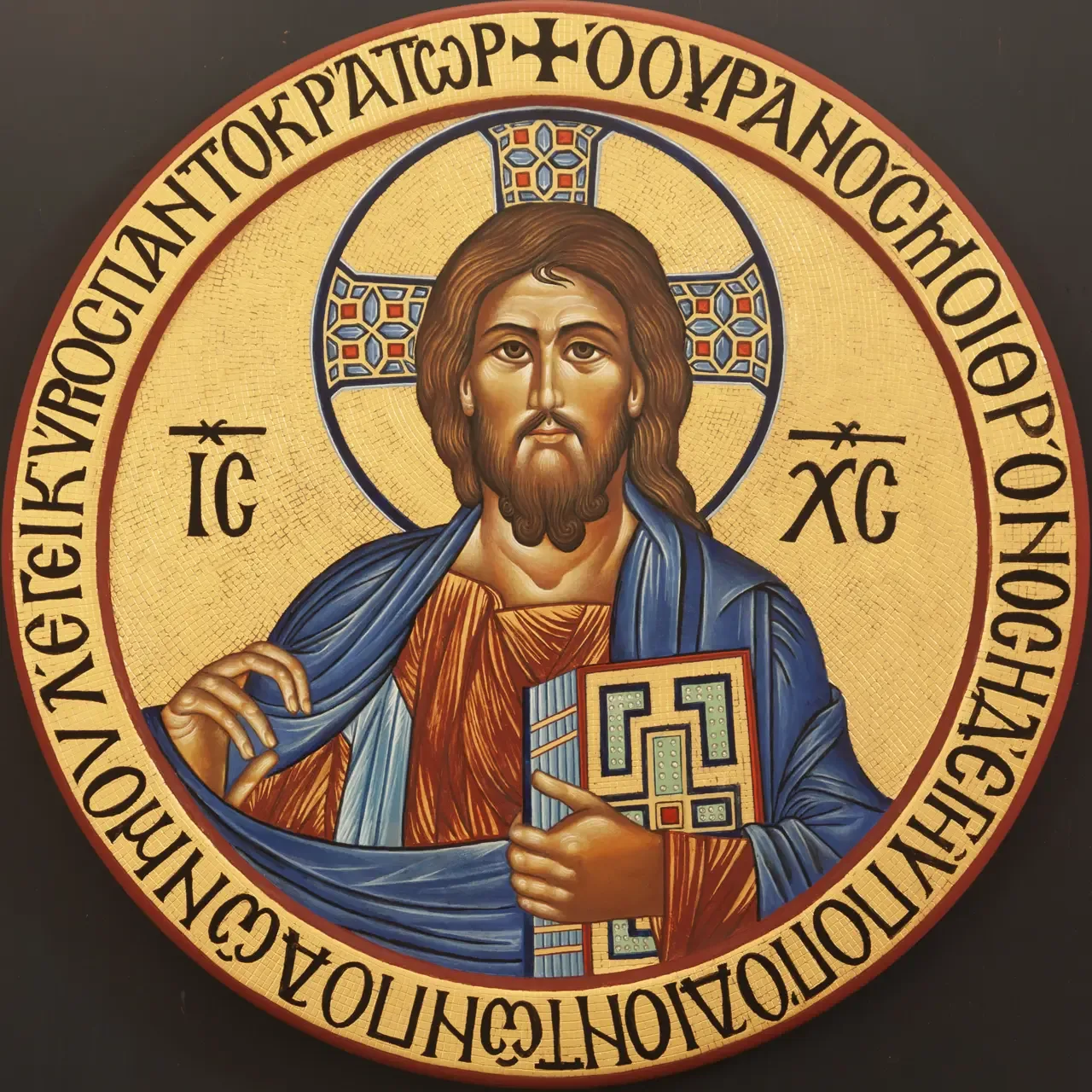
Sicily is full of artists who work quietly, with their hands and their hearts: icon painters, craftsmen, musicians, poets. Ilarion and his wife love to introduce them. Among them is Concetta Basile, who hand-paints icons in the Byzantine tradition in her studio between Messina and Taormina.
Ilarion's voice at Mass
Ilarion lives music in celebrations as a service: every Saturday, every Sunday and on the great feasts he accompanies the liturgy with his singing. If you are in Sicily on pilgrimage, you can hear his voice at a Mass where he sings, or at a concert or scheduled event, with sacred music and the concert of Neapolitan classics, serenades and Sicilian music.
To find out where and when he will be singing, just write to him. In the meantime you can listen to his voice on the home page.
How to take part
The days take place near Taormina, in Sicily. The places to visit are agreed together each time. There is no overnight stay: we share one day, and in the evening everyone returns to their own home. The gatherings have no price and do not depend on any offering: everyone is welcome for who they are. Everyone contributes as they can: anyone who cannot leave anything takes part like everyone else, by giving a little of their time.
The days are reserved for Catholic and Orthodox Christians, because they are lived in shared prayer. To ask for a date, simply write to me on WhatsApp. The spirit of the days is told in The joy of meeting.
If you would like to know what makes this mission possible, read The circle of love.
Explore the other pages
The days: Christian spiritual days in Sicily · The joy of meeting · Spiritual search and finding yourself · Day retreat, silent retreat and pilgrimage: the international names
Spiritual travel in Sicily: Spiritual tourism in Sicily: the guide · Pilgrimage walking routes in Sicily · Holy Week and Easter in Sicily · Religious festivals in Sicily: the calendar · Orthodox pilgrimage in Sicily · Spiritual Nordic walking and ski walking in Sicily
Nature and places: Spiritual Taormina · Spiritual walks in nature · Christian meditation in nature in Sicily · Places to meditate near Taormina and Messina · Places to meditate in Sicily
Prayer: Christian asceticism: the spiritual struggle · The prayer of the heart or Jesus Prayer · Hesychasm: the prayer of stillness · The Philokalia: the Neptic Fathers
The saints of Sicily: Byzantine Sicily and the Italo-Greek saints · Saint Hilarion the Great in Sicily · Saint Methodios of Syracuse · Saint Joseph the Hymnographer · Saint Elias the Younger of Enna · Saint Agatha of Catania · Saint Lucy of Syracuse · Saint Pancras of Taormina
Sources
- Sicilian Region, VisitSicily – The Francigena Ways of Sicily
- VisitSicily – Walking routes in Sicily
- UNESCO – Arab-Norman Palermo and the Cathedral Churches of Cefalù and Monreale
Frequently Asked Questions
Is there a Camino in Sicily, like the Camino de Santiago?
Yes: the Francigena Ways of Sicily and the island's other walking routes, such as the Magna Via Francigena from Palermo to Agrigento, the Via Francigena of the mountains to Messina, the Itinerarium Rosaliae and the Way of Saint James, are often called the "Sicilian Camino".
What is the best-known pilgrimage walk in Sicily?
The Magna Via Francigena, from Palermo to Agrigento: about 180 kilometres in nine stages through the interior. The Via Francigena of the mountains reaches the Messina and Taormina area.
Which sacred places should a pilgrim visit in Sicily?
Among the most important: Monreale and Cefalù Cathedrals with their Norman mosaics, the Shrine of Tindari with the Black Madonna, the Shrine of the Madonna della Rocca in Taormina, Catania with Saint Agatha and Syracuse with Saint Lucy.
Can I hear Ilarion sing at Mass?
Yes: Ilarion accompanies the liturgy with his singing every Saturday, every Sunday and on the great feasts. If you are in Sicily you can write to him to find out where and when he will be singing, at a Mass, a concert or a scheduled event.
Do Ilarion and his wife recommend trattorias and pastry shops?
Yes: they are happy to point you to trattorias serving real Sicilian food, pastry shops, and trusted bakeries, shops and markets.
Who can take part in the days?
The days are reserved for Catholic and Orthodox Christians, because they are lived in shared prayer.
Is there an overnight stay?
No: we share one day, and in the evening everyone returns to their own home or to the place where they are staying.
Is taking part free?
Yes. The gatherings have no price and do not depend on any offering: everyone is welcome for who they are.