Saint Hilarion the Great in Sicily: the Hermit Hidden near Pachino
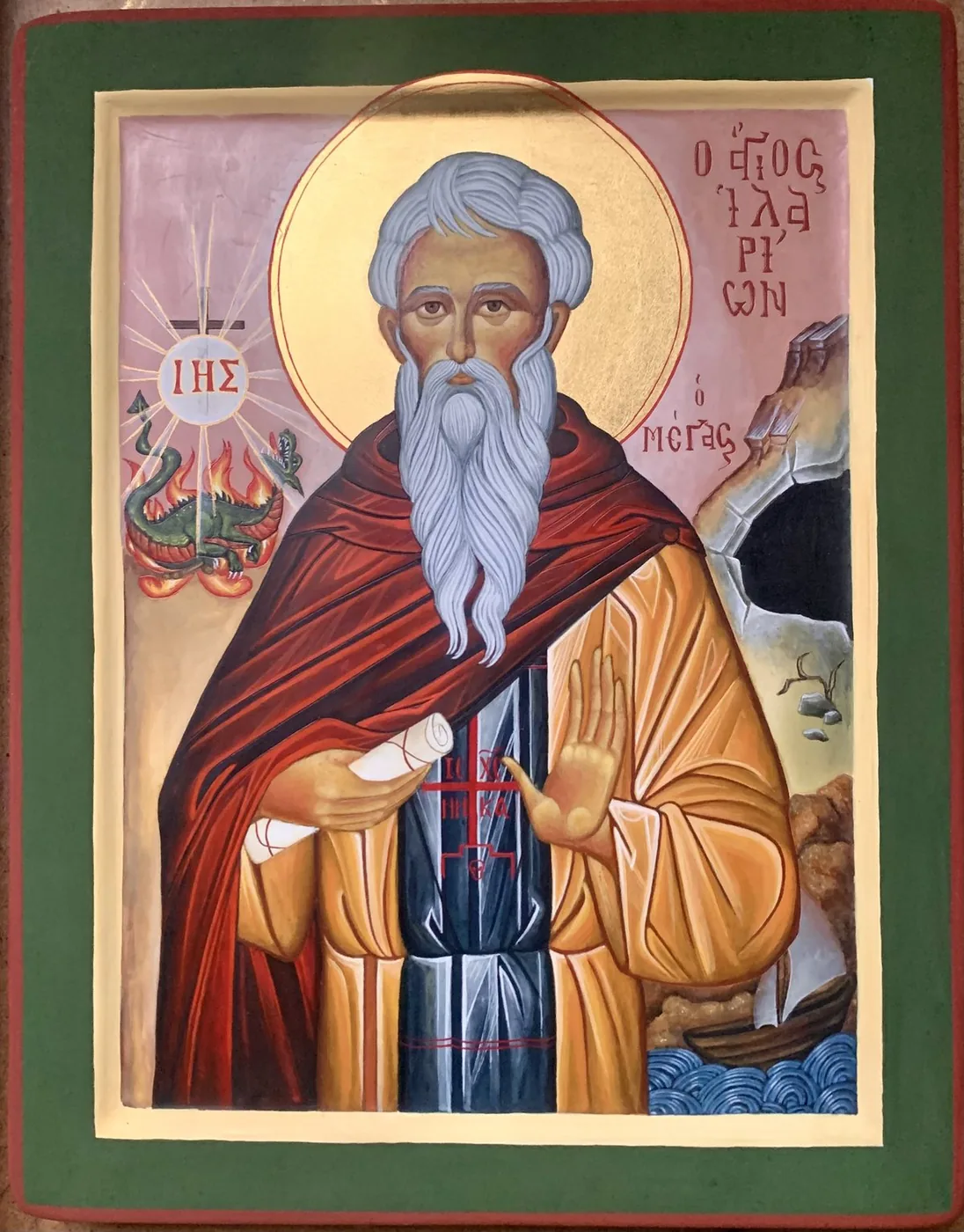
Saint Hilarion the Great is one of the fathers of Christian monasticism. Born around 291 at Tabatha, near Gaza, he was a disciple of Saint Anthony the Great and brought monastic life to Palestine. Having become famous for his miracles, he spent the rest of his life fleeing fame, until he reached Sicily. His story is told by Saint Jerome, who wrote his Life around 390.
From the desert of Gaza to fame
As a young student in Alexandria, Hilarion embraced the Gospel and went into the desert to meet Anthony. Back home, he lived for years as a hermit in the desert near Gaza, in prayer, fasting and manual work. The first monasteries of Palestine grew up around him. But the fame of his miracles drew ever greater crowds, and Hilarion, who desired only silence, decided to leave.
Landing at Pachino
After Egypt and Libya, Hilarion sailed for Sicily with his disciple Zananus. Jerome relates that halfway across he meant to pay his fare by selling a copy of the Gospels written with his own hand. When they reached the promontory of Pachynus (Pachino), today Capo Passero, near Portopalo di Capo Passero, at the south-eastern tip of the island, he offered the book to the ship's master, who refused it, seeing that the two had nothing but that volume and the clothes they wore.
Hidden in inland Sicily
So as not to be recognised by merchants arriving from the East, Hilarion left the coast and took refuge inland, about twenty miles from the sea. He lived in poverty: every day he tied a bundle of firewood which his disciple carried to the nearby village to sell, to buy a little bread. It was the hidden life he had always sought.
Meanwhile his disciple Hesychius had been searching for him for three years all over the Mediterranean. He found him thanks to a merchant met at Methone, in the Peloponnese, who told him of a Christian prophet in Sicily. There too, however, word spread: according to Jerome a possessed man in Saint Peter's basilica in Rome revealed where the saint was, and the sick began to arrive in great numbers. Hilarion then left for Epidaurus in Dalmatia, and later for Cyprus, where he died around 371.
Jerome does not give the exact place of the Sicilian hermitage. Over time local tradition has suggested various places in south-eastern Sicily, but all we know for certain is what the Life tells us: the landing at Pachino and a refuge inland, some twenty miles from the sea.
What he teaches us today
- Love of hiddenness. Hilarion did not seek to be seen: he sought God in silence.
- Freeing poverty. One Gospel book and one garment: he had left everything else behind.
- The work of one's hands. A bundle of firewood a day: humble work is prayer too.
- The journey. His life is a long pilgrimage, like that of anyone who is searching.
These are the same values we try to live during the spiritual days near Taormina: silence, simplicity, shared work, walking. I also write about them on the page about the spiritual search.
Feast day
Saint Hilarion is venerated by the Catholic Church and the Orthodox Churches, which commemorate him on 21 October. The Byzantine tradition gives him the title "the Great".
How to take part
The days take place near Taormina, in Sicily. The places to visit are agreed together each time. There is no overnight stay: we share one day, and in the evening everyone returns to their own home. Hospitality has no price and does not depend on any offering: whoever comes is welcomed for who they are. Everyone contributes as they can: anyone who cannot leave anything is welcomed like everyone else, and takes part by giving a little of their time.
The days are reserved for Catholic and Orthodox Christians, because they are lived in shared prayer. To ask for a date, simply write to me on WhatsApp. The spirit of the days is told in the manifesto of hospitality.
If you would like to know what makes this mission possible, read The circle of love.
Explore the other pages
The days: Christian spiritual days in Sicily · The Philoxenia of Abraham · Spiritual search and finding yourself · Day retreat, silent retreat and pilgrimage: the international names
Spiritual travel in Sicily: Spiritual tourism in Sicily: the guide · Pilgrimage walking routes in Sicily · Holy Week and Easter in Sicily · Religious festivals in Sicily: the calendar · Orthodox pilgrimage in Sicily · Spiritual Nordic walking and ski walking in Sicily
Nature and places: Spiritual Taormina · Spiritual walks in nature · Christian meditation in nature in Sicily · Places to meditate near Taormina and Messina · Places to meditate in Sicily
Prayer: Christian asceticism: the spiritual struggle · The prayer of the heart or Jesus Prayer · Hesychasm: the prayer of stillness · The Philokalia: the Neptic Fathers
The saints of Sicily: Byzantine Sicily and the Italo-Greek saints · Saint Methodios of Syracuse · Saint Joseph the Hymnographer · Saint Elias the Younger of Enna · Saint Agatha of Catania · Saint Lucy of Syracuse · Saint Pancras of Taormina
Sources
What this story teaches
Hilarion had only one book, the Gospel, and was ready to give it away: true wealth is what sets us free.
Frequently Asked Questions
Who was Saint Hilarion the Great?
A monk and hermit born around 291 near Gaza, a disciple of Saint Anthony the Great and founder of monasticism in Palestine. He died in Cyprus around 371.
Was Saint Hilarion really in Sicily?
Yes, according to the Life written by Saint Jerome around 390: he landed at the promontory of Pachino and lived hidden inland, about twenty miles from the sea.
Where was Saint Hilarion's hermitage in Sicily?
Saint Jerome does not give an exact place. We only know it was inland in south-eastern Sicily, some twenty miles from the coast at Pachino; the locations proposed by tradition are not certain.
What did Saint Hilarion do in Sicily?
He lived in prayer and poverty: every day he prepared a bundle of firewood which his disciple sold to buy bread.
Why did Saint Hilarion leave Sicily?
Because his presence was discovered and the sick began to arrive in great numbers. To find silence again he left for Epidaurus in Dalmatia, and then for Cyprus.
When is Saint Hilarion's feast day?
On 21 October, in both the Catholic Church and the Orthodox Churches.
Who wrote the life of Saint Hilarion?
Saint Jerome, the translator of the Bible into Latin, around 390. It is the main source on his life.
What does Saint Hilarion teach those who are searching?
That God is found in silence and simplicity, and that one can leave fame and the superfluous behind to seek what is essential.
Can you visit the places of Saint Hilarion?
The promontory of Pachino can be visited; the hermitage has not been identified with certainty. During the spiritual days near Taormina we talk about his story and, for those who wish, other destinations can be agreed.