Hesychasm: What Hesychast Prayer Is, from the Desert to Mount Athos
Hesychasm comes from the Greek word hesychía, meaning "stillness", "peace", "silence". It is the great spiritual tradition of the Christian East that seeks God in the stillness of the heart, through unceasing prayer and inner watchfulness. Its heart is the Jesus Prayer.
From the desert: "flee, be silent, be still"
The roots of hesychasm lie with the Desert Fathers of Egypt, Palestine and Syria, between the 4th and 6th centuries. To monks who asked how to be saved, Abba Arsenius answered with three words: "flee, be silent, be still". Flee noise, guard your words, remain before God. Saint Hilarion, who lived hidden in Sicily, also belonged to this world.
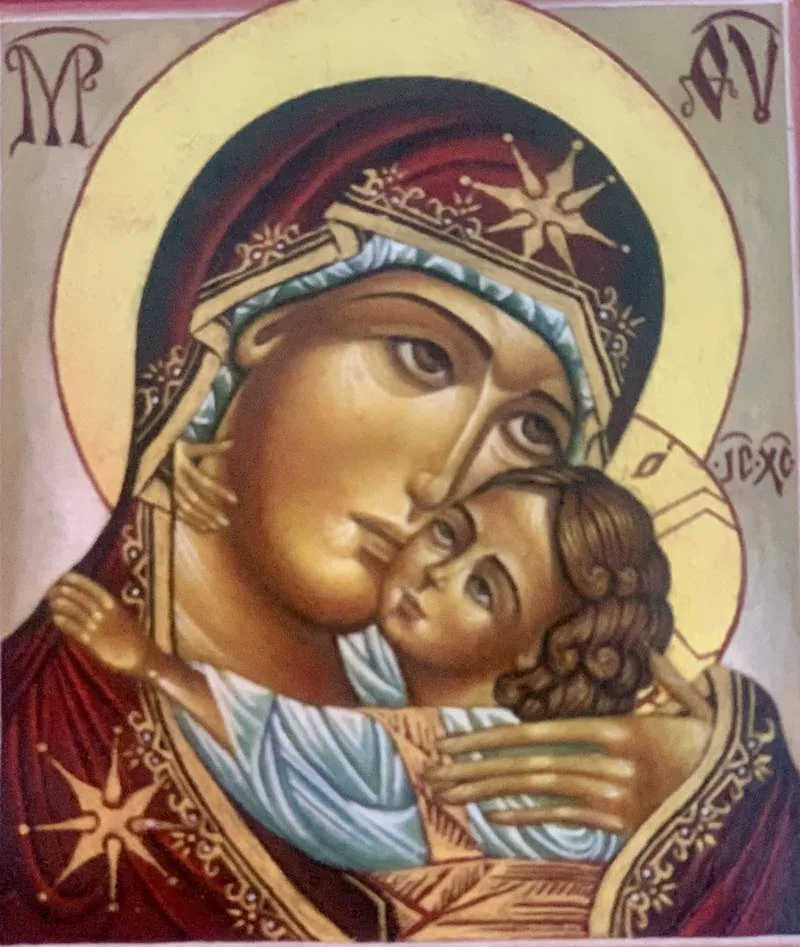
From Sinai to Athos
At the monastery of Sinai in the 7th century, Saint John Climacus wrote The Ladder of Divine Ascent, in which he speaks of "the remembrance of Jesus united to your breath". In the following centuries the Jesus Prayer became the centre of life for many monks, as far as Mount Athos, the Greek peninsula inhabited only by monks, where hesychasm flourished in the 13th and 14th centuries.
Saint Gregory Palamas
In the 14th century hesychasm was at the centre of a great debate. The Calabrian monk Barlaam criticised it; Saint Gregory Palamas (1296-1359), a monk of Athos and later Archbishop of Thessalonica, defended it. Palamas taught that man cannot know God in his essence, but can truly share in his uncreated energies, his life and his light, the same light the disciples saw on Mount Tabor at the Transfiguration. The 14th-century councils of Constantinople upheld Palamas, whom the Orthodox Churches venerate as a saint.
What hesychasm is not
- It is not a relaxation technique. Bodily posture and breathing are only aids; what matters is the relationship with Christ.
- It is not emptying the mind. The mind gathers into the heart and is filled with the name of Jesus.
- It is not a search for visions. The Fathers warn precisely against this: they seek humility, repentance and love.
- It is not a solitary path. It is lived within the Church, with the sacraments and, if possible, a spiritual guide.
Hesychasm and the Catholic Church
The Catholic Church regards Eastern spirituality with great esteem. In the letter Orientale lumen (1995) Saint John Paul II invited Catholics to discover its richness, and the letter Orationis formas (1989) recalls the value of the Jesus Prayer. The Catechism of the Catholic Church also discusses it in numbers 2665-2669.
The Philokalia
The writings of the masters of hesychasm were gathered in 1782 in the Philokalia, which ever since has been the reference book for those who want to learn the prayer of the heart.
Hesychasm and nature, in Sicily
The Italo-Greek monks of Sicily and Calabria lived in places of great silence: caves, valleys, mountains. This is no accident. Outer stillness helps inner stillness. During the spiritual days near Taormina we look for places like these, in the countryside, for a time of silence and prayer of the heart. I write about it on the page about Christian meditation in nature.
How to take part
The days take place near Taormina, in Sicily. The places to visit are agreed together each time. There is no overnight stay: we share one day, and in the evening everyone returns to their own home. Hospitality has no price and does not depend on any offering: whoever comes is welcomed for who they are. Everyone contributes as they can: anyone who cannot leave anything is welcomed like everyone else, and takes part by giving a little of their time.
The days are reserved for Catholic and Orthodox Christians, because they are lived in shared prayer. To ask for a date, simply write to me on WhatsApp. The spirit of the days is told in the manifesto of hospitality.
If you would like to know what makes this mission possible, read The circle of love.
Explore the other pages
The days: Christian spiritual days in Sicily · The Philoxenia of Abraham · Spiritual search and finding yourself · Day retreat, silent retreat and pilgrimage: the international names
Spiritual travel in Sicily: Spiritual tourism in Sicily: the guide · Pilgrimage walking routes in Sicily · Holy Week and Easter in Sicily · Religious festivals in Sicily: the calendar · Orthodox pilgrimage in Sicily · Spiritual Nordic walking and ski walking in Sicily
Nature and places: Spiritual Taormina · Spiritual walks in nature · Christian meditation in nature in Sicily · Places to meditate near Taormina and Messina · Places to meditate in Sicily
Prayer: Christian asceticism: the spiritual struggle · The prayer of the heart or Jesus Prayer · The Philokalia: the Neptic Fathers
The saints of Sicily: Byzantine Sicily and the Italo-Greek saints · Saint Hilarion the Great in Sicily · Saint Methodios of Syracuse · Saint Joseph the Hymnographer · Saint Elias the Younger of Enna · Saint Agatha of Catania · Saint Lucy of Syracuse · Saint Pancras of Taormina
Sources
- Encyclopaedia Britannica – Hesychasm
- Encyclopaedia Britannica – Saint Gregory Palamas
- Encyclopaedia Britannica – Philokalia
- Congregation for the Doctrine of the Faith, Orationis formas (1989), vatican.va
- Saint John Paul II, Orientale lumen (1995), vatican.va
What this story teaches
The stillness the Fathers sought is not the absence of noise: it is a heart that rests in God.
Frequently Asked Questions
What is hesychasm?
It is the spiritual tradition of the Christian East that seeks God in the stillness of the heart (hesychía), above all through the Jesus Prayer repeated with faith.
Is it hesychasm or hesychaism?
The correct form is hesychasm, from the Greek hesychía. Someone who practises it is called a hesychast.
What does hesychía mean?
In Greek it means stillness, peace, silence: the inner calm of one who rests in God.
Who was Saint Gregory Palamas?
A monk of Mount Athos, later Archbishop of Thessalonica (1296-1359), who defended hesychasm and taught man's participation in the uncreated energies of God.
What is the light of Tabor?
It is the light of Jesus' Transfiguration on Mount Tabor. For Palamas it is an uncreated light, the same that the purified heart can contemplate.
Is hesychasm compatible with the Catholic faith?
The Jesus Prayer is recognised and recommended by the Catechism of the Catholic Church (nos. 2665-2669), and the Catholic Church regards Eastern spirituality with esteem. Some theological aspects of Palamas remain a subject of dialogue between the Churches.
Is hesychasm a form of Eastern meditation?
No. It is Christian prayer addressed to Christ. Posture and breathing are only aids; one does not try to empty the mind or reach particular states.
Where was hesychasm born?
Among the Desert Fathers of Egypt, Palestine and Syria; it developed at Sinai and flourished on Mount Athos in the 13th and 14th centuries.
Which books should I read to discover hesychasm?
The Philokalia, The Ladder of Divine Ascent by Saint John Climacus and The Way of a Pilgrim are the best-known texts; English translations are available.
Can you live hesychasm without being a monk?
Yes, to the measure of one's own life: a few minutes of the Jesus Prayer each day, silence, guarding the heart. Many lay people practise it.