Saint Joseph the Hymnographer: the Sicilian Who Gave Voice to the Byzantine Liturgy
Anyone who enters an Orthodox or Byzantine-rite church, anywhere in the world, almost certainly hears some hymn by a Sicilian. Saint Joseph the Hymnographer is considered one of the greatest poets of the Eastern liturgy: much of the canons of the Menaion, the book of the saints for each day, and many texts of the Parakletike bear his name.
A family in flight
Joseph was born in Sicily around 816, the son of Plotinus and Agatha. The most widespread tradition gives Syracuse as his birthplace; some sources speak of Palermo. These were the years of the Arab invasion of the island, and the family, like many other Christian families, was forced to flee: according to his biographer, they took refuge in the Peloponnese.
Monk in Thessalonica
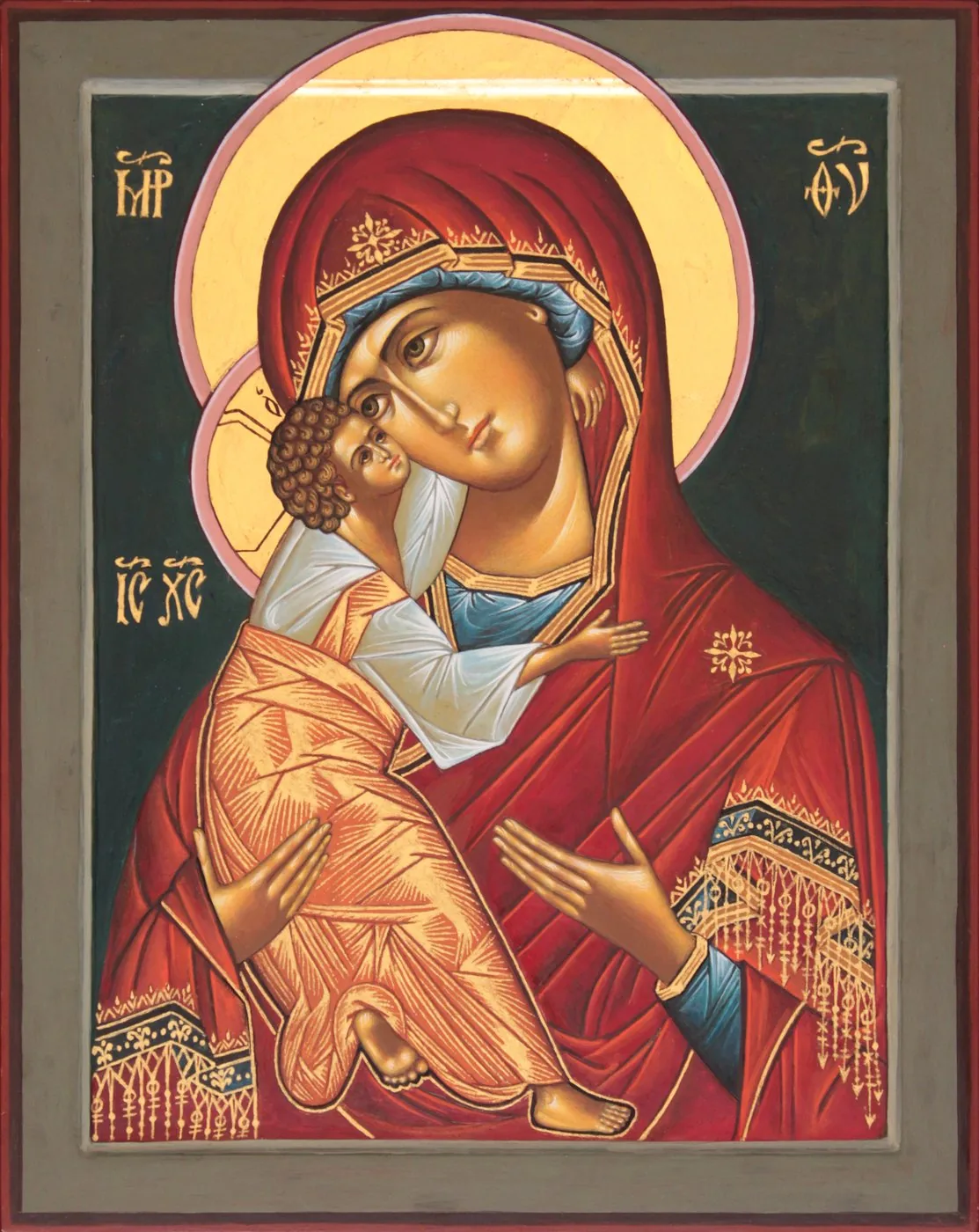
At fifteen Joseph entered the Latomou monastery in Thessalonica. Around 840 he was ordained a priest. He became close to Saint Gregory of Decapolis, with whom he moved to Constantinople in the midst of the iconoclast crisis: like Saint Methodios of Syracuse, he defended the veneration of icons.
Captive of pirates
Sent to Rome to seek the pope's support, he fell into the hands of pirates on the way and was taken captive to Crete. Even there he went on praying and supporting the other prisoners. Once freed, he returned to Constantinople, where he founded a monastery and became keeper of the sacred vessels of Hagia Sophia. Later he also knew exile, in Cherson, in Crimea. He died in 886.
The poet of the liturgy
His great legacy is his hymns. Joseph composed a great many canons, long poetic hymns in several odes sung at Matins, dedicated to the saints, the Mother of God, the angels and the apostles. Tradition also attributes to him the canon that accompanies the Akathist Hymn to the Mother of God. Every day, all over the world, monks and faithful pray with his words.
What he teaches us today
- Prayer is sung. The beauty of word and music opens the heart to God.
- Song can be born of pain. Exile, captive, persecuted: and yet he left the Church hymns of praise.
- Sicily gave a voice to the East. A son of this island still prays today with millions of Christians.
For someone like me, who lives by music and singing in churches, Saint Joseph the Hymnographer is a model: liturgical singing is prayer, not decoration. During the spiritual days near Taormina shared prayer also includes a song. The story of the Sicilian saints is on the page Byzantine Sicily and the Italo-Greek saints.
Feast day
Saint Joseph the Hymnographer is commemorated on 3 April in the Roman Martyrology and on 4 April in the calendar of the Orthodox Churches.
How to take part
The days take place near Taormina, in Sicily. The places to visit are agreed together each time. There is no overnight stay: we share one day, and in the evening everyone returns to their own home. Hospitality has no price and does not depend on any offering: whoever comes is welcomed for who they are. Everyone contributes as they can: anyone who cannot leave anything is welcomed like everyone else, and takes part by giving a little of their time.
The days are reserved for Catholic and Orthodox Christians, because they are lived in shared prayer. To ask for a date, simply write to me on WhatsApp. The spirit of the days is told in the manifesto of hospitality.
If you would like to know what makes this mission possible, read The circle of love.
Explore the other pages
The days: Christian spiritual days in Sicily · The Philoxenia of Abraham · Spiritual search and finding yourself · Day retreat, silent retreat and pilgrimage: the international names
Spiritual travel in Sicily: Spiritual tourism in Sicily: the guide · Pilgrimage walking routes in Sicily · Holy Week and Easter in Sicily · Religious festivals in Sicily: the calendar · Orthodox pilgrimage in Sicily · Spiritual Nordic walking and ski walking in Sicily
Nature and places: Spiritual Taormina · Spiritual walks in nature · Christian meditation in nature in Sicily · Places to meditate near Taormina and Messina · Places to meditate in Sicily
Prayer: Christian asceticism: the spiritual struggle · The prayer of the heart or Jesus Prayer · Hesychasm: the prayer of stillness · The Philokalia: the Neptic Fathers
The saints of Sicily: Byzantine Sicily and the Italo-Greek saints · Saint Hilarion the Great in Sicily · Saint Methodios of Syracuse · Saint Elias the Younger of Enna · Saint Agatha of Catania · Saint Lucy of Syracuse · Saint Pancras of Taormina
Sources
- Orthodox Church in America – Venerable Joseph the Hymnographer
- Encyclopaedia Britannica – Sicily, history
What this story teaches
Exiled and imprisoned, Joseph never stopped singing: liturgical song is often born where life is hardest.
Frequently Asked Questions
Who was Saint Joseph the Hymnographer?
A monk born in Sicily around 816, who died in 886, considered one of the greatest authors of hymns of the Byzantine liturgy.
Was Saint Joseph the Hymnographer Sicilian?
Yes. The most widespread tradition says he was born in Syracuse; some sources give Palermo. His family left the island because of the Arab invasion.
What did Saint Joseph the Hymnographer write?
A great many liturgical canons, largely collected in the Menaion, and texts of the Parakletike. Tradition also attributes to him the canon of the Akathist Hymn.
What is a canon in the Byzantine liturgy?
It is a poetic hymn divided into several odes, inspired by the biblical canticles, sung mainly at Matins.
Why was he a prisoner in Crete?
While travelling to Rome to ask the pope for help against iconoclasm he was captured by pirates and taken to Crete. He was later freed.
When is Saint Joseph the Hymnographer's feast day?
On 3 April in the Roman Martyrology and on 4 April in the Orthodox calendar.
What was his link with Saint Methodios?
They were contemporaries, both of Sicilian origin and defenders of the icons during iconoclasm.
Why is singing important in prayer?
Because it unites word, breath and beauty. The saying attributed to Saint Augustine is that whoever sings well prays twice; the Byzantine liturgy is almost entirely sung.