Byzantine Sicily and the Italo-Greek Saints: Ancient Christian Sicily
For almost four centuries Sicily was a Christian land of Greek language and rite. Monks, bishops, liturgical poets and martyrs born on the island shaped the history of the whole Church, East and West. Many of them are still venerated today by both Catholics and Orthodox, because they lived before the separation of 1054. To know them is to discover an ancient and spiritual Sicily that still speaks to those who seek God.
Byzantine Sicily in brief
- 535: the general Belisarius conquers Sicily for the Eastern Roman Empire, whose capital is Constantinople.
- 7th century: the island is one of the Empire's most important provinces. Between 663 and 668 Emperor Constans II sets up his court in Syracuse. Several popes of this century are Sicilian, such as Agatho and Leo II.
- 8th-9th century: Sicily gives the Church great figures such as Saint Methodios, Patriarch of Constantinople, and Saint Joseph the Hymnographer.
- 827-902: the Arabs land at Mazara and conquer the island city by city: Palermo in 831, Syracuse in 878, Taormina in 902. Many Christians and monks flee to Calabria, the Peloponnese and Constantinople.
- 11th-12th century: under the Normans Christianity flourishes again. Alongside the Latin Church, the Norman counts and kings protect the Greek monasteries, especially in the Val Demone, the north-eastern part of the island around Messina and Taormina.
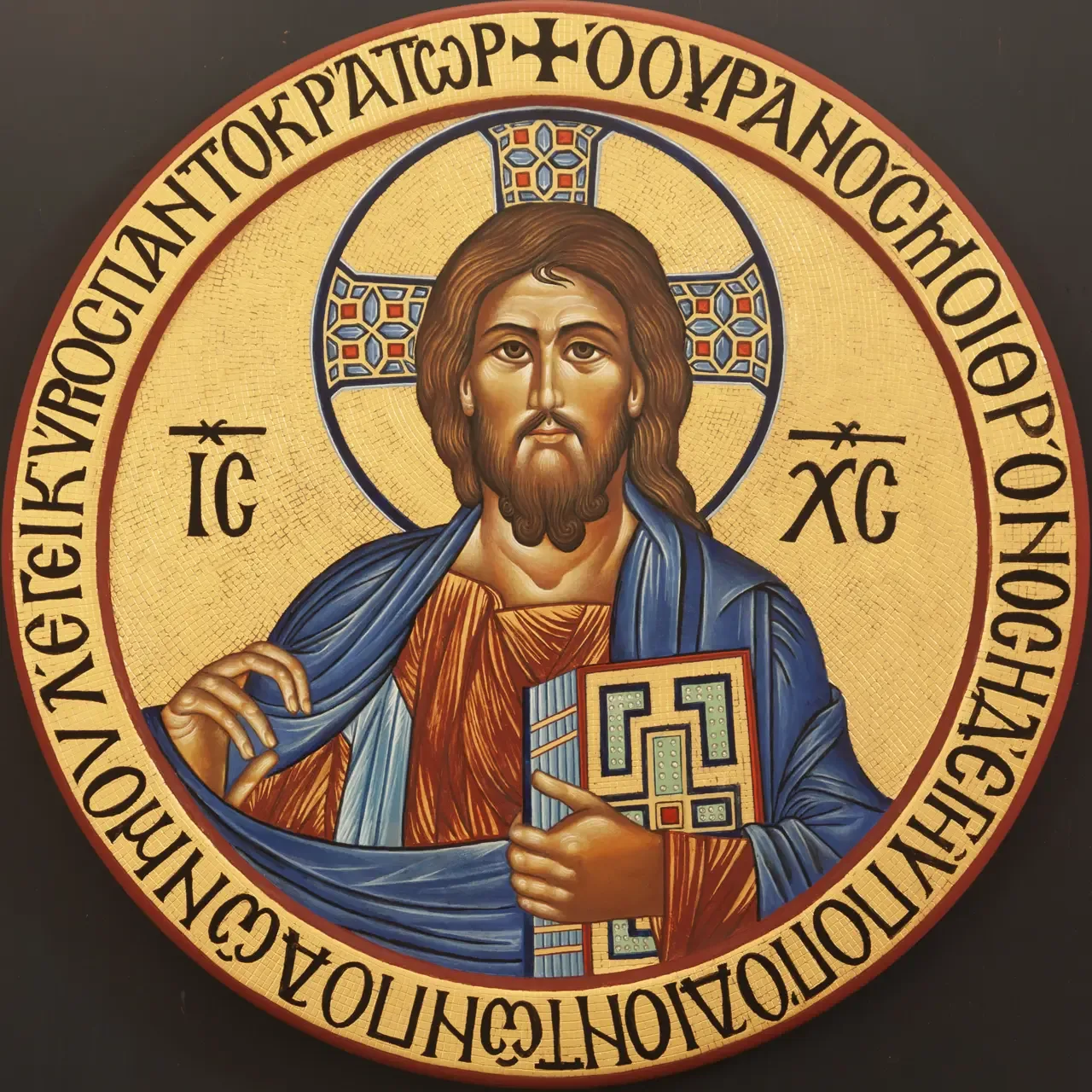
Italo-Greek monasticism
The Greek-rite monks of southern Italy are often called Basilians, because they followed the teachings of Saint Basil the Great on community life. They lived by prayer, work and study, in small monasteries or as hermits in caves. They copied manuscripts, composed hymns and welcomed pilgrims. Many Italo-Greek saints were great travellers: fleeing war, they sought God between Sicily, Calabria, Greece, the Holy Land and Constantinople.
In the Messina area churches of ancient Basilian monasteries of extraordinary beauty survive, such as Santi Pietro e Paolo d'Agrò at Casalvecchio Siculo, a few kilometres from Taormina: a monastery mentioned in a privilege of Roger II of 1116 and rebuilt in 1172 by the master builder Gerard the Frank, as the inscription on the portal records.
The saints of Christian Sicily
- Saint Agatha of Catania: young martyr of Catania, killed in 251 during the persecution of Decius.
- Saint Lucy of Syracuse: martyr of Syracuse, who died in 304 during the persecution of Diocletian.
- Saint Pancras of Taormina: according to tradition the first bishop of Taormina, in apostolic times.
- Saint Hilarion the Great in Sicily: the great hermit of Gaza who, according to Saint Jerome, lived hidden in Sicily in the 4th century.
- Saint Methodios of Syracuse: born in Syracuse, confessor of the icons and Patriarch of Constantinople from 843.
- Saint Joseph the Hymnographer: born in Sicily around 816, one of the greatest poets of the Byzantine liturgy.
- Saint Elias the Younger of Enna: a monk born in Enna in 823, who met his disciple Daniel in Taormina.
Saints of the whole Church
These saints lived before the separation between Rome and Constantinople in 1054. They therefore belong to the shared memory of Catholics and Orthodox. Saint John Paul II liked to say that the Church must breathe "with her two lungs", East and West. Sicily, where the two lungs breathed together for centuries, is a living example. This is also why the spiritual days I offer are open to Catholic and Orthodox Christians.
A pilgrimage through ancient Sicily
During the Christian spiritual days near Taormina we talk about these saints and, when possible, visit places linked to their memory. Destinations are agreed together: Basilian churches in the Messina area, the Taormina of Saint Pancras or, for those who wish, the cities of the great saints such as Syracuse, Catania and Enna. Some nearby places are described in Spiritual Taormina: saints and churches.
How to take part
The days take place near Taormina, in Sicily. The places to visit are agreed together each time. There is no overnight stay: we share one day, and in the evening everyone returns to their own home. Hospitality has no price and does not depend on any offering: whoever comes is welcomed for who they are. Everyone contributes as they can: anyone who cannot leave anything is welcomed like everyone else, and takes part by giving a little of their time.
The days are reserved for Catholic and Orthodox Christians, because they are lived in shared prayer. To ask for a date, simply write to me on WhatsApp. The spirit of the days is told in the manifesto of hospitality.
If you would like to know what makes this mission possible, read The circle of love.
Explore the other pages
The days: Christian spiritual days in Sicily · The Philoxenia of Abraham · Spiritual search and finding yourself · Day retreat, silent retreat and pilgrimage: the international names
Spiritual travel in Sicily: Spiritual tourism in Sicily: the guide · Pilgrimage walking routes in Sicily · Holy Week and Easter in Sicily · Religious festivals in Sicily: the calendar · Orthodox pilgrimage in Sicily · Spiritual Nordic walking and ski walking in Sicily
Nature and places: Spiritual Taormina · Spiritual walks in nature · Christian meditation in nature in Sicily · Places to meditate near Taormina and Messina · Places to meditate in Sicily
Prayer: Christian asceticism: the spiritual struggle · The prayer of the heart or Jesus Prayer · Hesychasm: the prayer of stillness · The Philokalia: the Neptic Fathers
The saints of Sicily: Saint Hilarion the Great in Sicily · Saint Methodios of Syracuse · Saint Joseph the Hymnographer · Saint Elias the Younger of Enna · Saint Agatha of Catania · Saint Lucy of Syracuse · Saint Pancras of Taormina
Sources
- Encyclopaedia Britannica – Sicily, history
- Wikipedia – Santi Pietro e Paolo d'Agrò
- Saint John Paul II, Ut unum sint (1995), no. 54, vatican.va
- Catholic Encyclopedia – Methodius I (New Advent)
- Wikipedia – Elias of Enna (with bibliography)
- Wikipedia – Siege of Taormina (902)
What this story teaches
The saints of Sicily breathed with both lungs of the Church: remembering them together, Catholics and Orthodox, is already a step towards unity.
Frequently Asked Questions
What is meant by Byzantine Sicily?
The period, from 535 to the Arab conquest completed in 902, when Sicily was part of the Eastern Roman Empire, with Greek language and rite widespread.
Who are the Italo-Greek saints?
They are saints born or living in southern Italy, especially Sicily and Calabria, within the Christian tradition of Greek language and rite. Many were monks.
Why do people speak of Basilian monks?
Because the Greek monks of southern Italy followed Saint Basil the Great's teaching on monastic life. The name "Basilians" became common especially in Norman and modern times.
Are Sicilian saints also venerated by the Orthodox?
Yes: those who lived before 1054, such as Saint Agatha, Saint Lucy, Saint Pancras, Saint Methodios, Saint Joseph the Hymnographer and Saint Elias the Younger, are in both the Catholic and Orthodox calendars.
When did Byzantine Sicily end?
With the Arab conquest, which began in 827 at Mazara and was completed in 902 with the fall of Taormina. Rometta, in the Messina area, held out until 965.
Are there still Basilian churches in Sicily?
Yes, especially in the Messina area. One of the most famous is the church of Santi Pietro e Paolo d'Agrò at Casalvecchio Siculo, rebuilt in 1172, near Taormina.
What is the Val Demone?
It is the historical name of north-eastern Sicily, around Messina, the Nebrodi and the Peloritani: there Greek Christianity survived longest.
Were there Sicilian popes?
Yes: in the 7th century several popes were Sicilian or linked to Sicily, including Saint Agatho and Saint Leo II.
What does it mean to breathe with two lungs?
It is an image dear to Saint John Paul II: the Church needs both the Eastern and the Western tradition, as a body needs two lungs.
Can we visit places of the Italo-Greek saints?
Yes. During the spiritual days near Taormina destinations are agreed together: Basilian churches, places of Saint Pancras or, for those who wish, Syracuse, Catania and Enna.
Why did so many Sicilian monks go to Calabria and Greece?
To escape the war and the Arab conquest of the 9th century. In this way the Greek monasticism of Sicily spread to Calabria and beyond.